
29.11.11
David Crystal on a BBC Show Talking About the Merits of Texting!
David Crystal on BBC: this actually is an episode from 2009 but I've just come across it, and found it quite entertaining, witty and related to our work!

To LESSON PLAN or NOT to LESSON PLAN…that is the question!
Take a look at Tony Gurr's Blog: here is an interesting post.

21.11.11
Eli Hinkel joins us at the 11th METU International ELT Convention

Eli Hinkel has taught ESL and applied linguistics, as well as trained teachers, for over thirty years and has published numerous books and articles on learning second culture, and second language grammar, writing, and pragmatics in such journals as TESOL Quarterly, Applied Linguistics, Journal of Pragmatics, and Applied Language Learning. She is also the editor of the Routledge ESL & Applied Linguistics Professional Series of books and textbooks for teachers and graduate students.
4.11.11
Ted Rodgers is giving a plenary talk at the 11th METU Convention

Ted Rodgers has been faculty member at the University of Hawaii since 1968 and Professor of Psycholinguistics since 1976. He has served on
the faculties of Education, English, English as a Second Language,
Information Sciences and Psychology. For fifteen years he directed
the Hawaii English Program, the largest venture in language education
curriculum development as yet undertaken in the U.S. He has authored
some sixty books and articles and is co-author (with Jack Richards) of
the most popular text on language teaching methodology, Approaches and
Methods in Language Teaching, Second Edition (2001) Cambridge
University Press. He also co-authored (with J.D. Brown) Doing Second
Language Research (Oxford University Press, 2002). Rodgers designed the unique group study format for this text. A recent publication is the chapter “Methods, Approaches and Principles” in the Handbook of Applied Linguistics, Vol 6 (2009).
Professor Rodgers has had residential consultancies and/or visiting
professorships in Australia, China, England, Hungary, Japan, Laos,
Malaysia, and Turkey. He was Senior Fulbright Fellow and Director of
the MATEFL Program at Bilkent University 1995 - 1997. Prof. Rodgers
has returned to Turkey ten times in connection with the MATEFL Program
and other assignments in Turkey. He has served as Senior
Professor and Program Designer in a new degree program in International
Communications at Kanda University, Japan (2001 – 2002).
26.10.11
Nina Spada is giving a plenary talk at the 11th METU ELT Convention

Dr. Nina Spada is Professor in the Second Language Education program at OISE University of Toronto where she teaches courses in second language acquisition, research methods and instructed SLA. Dr. Spada’s research focuses on how second languages are learned in classroom settings. She is particularly interested in the effects of form-focused instruction on L2 learning. Publications based on her research regularly appear in Studies in Second Language Acquisition, Language Learning and The Modern Language Review. She is co-author of the award-winning textbook How Languages are Learned published by Oxford University Press. Dr. Spada is Past President of the American Association for Applied Linguistics.
20.10.11
The Mentoring System: Vol. XI - Merve Çavuş
Merve Çavuş was another mentee from the previous year and she has described her experience regarding the mentoring system as "quite enjoyable, extremely rewarding and a little challenging." She says: "What we have learned and practiced during the training made me feel more confident about my teaching methods and strategies. I make use of the tips we have been taught in class and I find them very useful."
For Çavuş, three advantages of this system are as follows:
-it makes you feel confident
-it guides you through the whole process of teaching at METU
-it helps you be creative
As for the disadvantages, she states only two items, which are:
-it might make you co-dependent.
-it can be time-consuming from time to time.
In general, she finds the system fruitful and rewarding, and she believes that she has benefited from it a lot.
In thanking Çavuş for her comments, we'd like to ask you to keep following us. More to come soon...
19.10.11
The Mentoring System: Vol. X - Zeynep Nur Toker
Our enthusiastic colleague Zeynep Nur Toker was also one of the previous year's mentees. She plans to present at the 11th METU International ELT Convention, and she also works as a volunteer at our Book Fund, which helps supply books for DBE students when necessary. She commented on her experience regarding the mentoring system as follows:
It was my first professional year as an instructor; therefore, mentoring system was fruitful for me in and out of the classroom. First of all, I could prepare and send my lesson plans to her before executing them in my lessons. My mentor’s and my trainer’s feedback provided me with new perspectives over my preparations. Secondly, I did not know how to cope with students’ problems and come up with some solutions for them. However, my mentor helped me find many ways through the journals we prepared weekly during the second term. At the end of each week, we met with my mentor again and checked the outcomes of our solutions of the previous week. Her experience with the students provided us with many examples and solutions. Thirdly, I was not familiar to METU and DBE culture. She helped me about the rules and regulations around DBE and I gained self-confidence in my workplace. To sum up, mentoring system helped me become a real member of this institution. Although it was a challenging experience with all the sessions and observations, mentoring program was an important step for my career as an instructor. I could apply the methods and techniques that I learnt and practiced during my probation and this year I can apply the successful ones in my lessons.
It was my first professional year as an instructor; therefore, mentoring system was fruitful for me in and out of the classroom. First of all, I could prepare and send my lesson plans to her before executing them in my lessons. My mentor’s and my trainer’s feedback provided me with new perspectives over my preparations. Secondly, I did not know how to cope with students’ problems and come up with some solutions for them. However, my mentor helped me find many ways through the journals we prepared weekly during the second term. At the end of each week, we met with my mentor again and checked the outcomes of our solutions of the previous week. Her experience with the students provided us with many examples and solutions. Thirdly, I was not familiar to METU and DBE culture. She helped me about the rules and regulations around DBE and I gained self-confidence in my workplace. To sum up, mentoring system helped me become a real member of this institution. Although it was a challenging experience with all the sessions and observations, mentoring program was an important step for my career as an instructor. I could apply the methods and techniques that I learnt and practiced during my probation and this year I can apply the successful ones in my lessons.
More to come about the mentoring system soon... Keep following us!
Nicky Hockly is at the 11th METU Elt Convention

Nicky is the Director of Pedagogy of The Consultants-E (www.theconsultants-e.com), an online training and development organisation which helps teachers learn to use technology effectively in the classroom. Nicky specialises in online teaching and training via virtual learning environments such as Moodle. Author of several methodology books about technology in EFL, her latest book (to be published in 2012) is about digital literacies. You can read more about Nicky at:
www.theconsultants-e.com/about/team/NickyHockly.aspx
18.10.11
The Mentoring System: Vol. IX - Münire Vecdi Özbilen
Here's another interview for our readers - one of our staffroom mentors from the previous year, Münire Vecdi Özbilen, describes her experience as follows:
I was a staffroom mentor for 2 semesters and I witnessed that my experience did not always match with other mentors’ experience. I believe that every mentor’s experience differs based on the mentee(s) they mentor. Each mentee has their own dynamics, some of which are their work experience, personality, and students, and so the mentor has to be able to read into these so as to guide them in the best direction possible.
I believe that the mentoring system is pretty advantageous because the mentee benefits from it in ways that we couldn’t when we were being trained. The mentor is there with the mentee 7/11 trying to guide or help them in areas they may feel insecure, i.e., how to seat students in quizzes and midterms, how to mark quizzes and midterms, how to deal with class management issues on the spot, enlightening them with the department’s unwritten culture and ease their adaptation period, etc. I certainly didn’t have that during my training and thanks to other colleagues in the staffroom, we felt safer and more at ease.
With this being said, when the mentoring program was introduced, it suddenly all made sense to me. Having someone you can trust in the staffroom with you was what my colleagues were doing during my training. Now, it has become formal, structured and planned. I’m sure as time passes, more and more people and maybe even other institutions will see the benefits of this system and would want to adapt it.
More to come soon. Keep following us!
The Mentoring System: Vol. VIII - Sümeyye Güllü Göksu
Our followers might have noticed that the series on the mentoring system follows no certain order, but rather we try to publish comments from mentors and mentees equally. Today's guest is Sümeyye Güllü Göksu, who commented on her experience regarding the training year as follows:
"I would like to start from the end of the year, rather than the beginning of it. When everything was over, I felt as if someone had taken a burden off my shoulders. That burden was not the busy schedule, the many assignments we did or the observations we went through, as could be guessed. It was actually the burden of “being inexperienced”.
I had many real-life experiences here at METU where I could apply the techniques I have learnt as they are, or with little amendments. While I was doing my practice teaching at the senior year at university, I felt like a fish out of water. Real life was too real and what we learnt were stories from a fantasy land. METU was the first place where I learnt “real things” for real life.
In brief, I can say that all I know is, if I weren’t trained at METU, DBE; I would never be the teacher I am today, or I would have spent years for it. The trainees of METU come out as experienced teachers already for sure..."
More to come soon... Keep following us!
14.10.11
The Mentoring System: Vol. VII - Pınar Vardar
One of our mentors, Pınar Vardar, has also expressed her feelings and thoughts upon the experience she has had as a mentor. She has kindly responded to our questions regarding the benefits and the drawbacks of the system. Here is what she has said to us:
The mentoring system is beneficial for DBE since it is a way of helping the newcomers to understand the culture of the institution regarding administrative and academic issues while they try to adapt to the new environment. In this system, the mentees have the chance to get constant help and guidance from their mentors whenever they need, so they feel safe knowing that there is always someone near them for help. Moreover, the mentors can be of great help for the mentees in terms of their professional development through both sharing their experiences and encouraging them to try out new techniques in their classrooms. I think the system works well as the mentors work hard to help the mentees develop professionally and personally and also they are chosen on a voluntary basis. The mentoring system can be maintained for the coming years.
The mentoring system is beneficial for DBE since it is a way of helping the newcomers to understand the culture of the institution regarding administrative and academic issues while they try to adapt to the new environment. In this system, the mentees have the chance to get constant help and guidance from their mentors whenever they need, so they feel safe knowing that there is always someone near them for help. Moreover, the mentors can be of great help for the mentees in terms of their professional development through both sharing their experiences and encouraging them to try out new techniques in their classrooms. I think the system works well as the mentors work hard to help the mentees develop professionally and personally and also they are chosen on a voluntary basis. The mentoring system can be maintained for the coming years.
We'd like to thank Pınar Vardar for her comments.
More to come about the mentoring system soon, keep following us!
13.10.11
The Mentoring System: Vol. VI - Anıl Albağlar
Yet another one of our mentees, Anıl Albağlar, has just sent his comments on the experience he has had regarding the mentoring system last year. We'd like to share his notes with our readers and for those who want to know more about the mentoring system:
I graduated from a really small university, so this mentoring programme was the best thing that could happen to me. I learnt how to prepare effective lessons and what to expect from my classes while doing that. I learnt all about METU and our student profile. We shared all the materials we had with each other throughout the year and had a great time together. We had meetings every week and tried to find solutions to our problems in and outside of the class. Besides, we had the classroom mentors who gave us a better idea of the different level classes we have at DBE. As for the so called disadvantages, the programme was extremely demanding. There were times I couldn't spare any time for myself. No pain no gain, though! Right now, I can say that the "kid" who arrived is not the same "guy". I've learnt a lot.
I graduated from a really small university, so this mentoring programme was the best thing that could happen to me. I learnt how to prepare effective lessons and what to expect from my classes while doing that. I learnt all about METU and our student profile. We shared all the materials we had with each other throughout the year and had a great time together. We had meetings every week and tried to find solutions to our problems in and outside of the class. Besides, we had the classroom mentors who gave us a better idea of the different level classes we have at DBE. As for the so called disadvantages, the programme was extremely demanding. There were times I couldn't spare any time for myself. No pain no gain, though! Right now, I can say that the "kid" who arrived is not the same "guy". I've learnt a lot.
More to come soon! Keep following us!
12.10.11
Claudia Harsch talks at the 11th METU International Convention
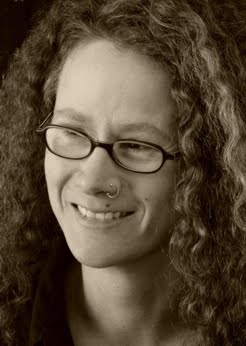
Dr. Harsch is currently an Assistant Professor at the Centre for Applied Linguistics, The University of Warwick, United Kingdom
Claudia Harsch researches and teaches at Warwick in the field of language learning, teaching, testing and assessment. Her research interests focus on the analysis and implementation of the Common European Framework of Reference (CEFR), on qualitative methods to develop and validate language tests, on constructing valid tasks and rating scales for assessing writing, on teacher training in the field of assessment literacy, on the role of learners' self assessment, the role of assessment across cultures, and on conceptualisations and possible approaches to assessing intercultural communicative competence. She has presented at international conferences and published widely in the area of language testing and assessment.
Claudia studied and worked in Germany before she joined Warwick. She was scientific project director at the Institute for Educational Progress at the Humboldt-University Berlin from 2007 to 2009, where she was responsible for the training of item developers, the development and administration of a standard-based test battery for English as foreign language, and for test validation and standard setting. Her research focused on instruments for assessing writing, on standard setting, and on the usability of the CEFR in foreign language test development. Before this, she worked as research fellow at the University of Augsburg between 2002 and 2007 in several language testing projects, researching for example the construct of the C-test, and the alignment of rating scales to the CEFR. At Augsburg, she conducted her MA and Dr Phil studies in Applied Linguistics and Didactics of English and German as foreign languages. Her doctoral thesis investigated the relevance of the CEFR for various aspects of language assessment.
Claudia is member of several advisory boards in test development projects, think tanks, and professional societies. She has given lectures and seminars for undergraduate and postgraduate students and conducted numerous workshops for in-service teacher training programmes. She also taught German as foreign language in Huddersfield, UK and Augsburg, Germany.
Recent selected publications:
Claudia Harsch & André A. Rupp (2011): “Designing and Scaling Level-specific CEFR Writing Tasks.” In: Language Assessment Quarterly 8(1), 1-34.
Claudia Harsch, Hans Anand Pant & Olaf Köller (Eds.) (2010): Developing Standards-based Assessment Tasks for English as a First Foreign Language. Standard-setting Procedures in Germany. Münster: Waxmann.
Claudia Harsch (2009): „Das Nutzen externer Evaluation im fremdsprachlichen Unterricht“. [The use of external evaluation in the foreign language classroom]. In: Praxis fsu 01/09, p.9-14.
André Rupp, Miriam Vock, Claudia Harsch & Olaf Köller (2008): Developing Standards-based Assessment Tasks for English as a First Foreign Language – Context, Processes and Outcomes in Germany. Münster: Waxmann.
Claudia Harsch (2007). Der gemeinsame europäische Referenzrahmen für Sprachen. Leistung und Grenzen. [The Common European Framework of Reference for Languages: Attainment and Limitations]. Saarbrücken, VDM Verlag Dr. Müller.
11.10.11
The Mentoring System: Vol. V - Sevde Yüksel
The fifth guest of our series is Sevde Yüksel, a new colleague of ours, and one of the previous year's mentees. It's a pleasure for us to publish her well-written comments on her experience regarding the mentoring system:
I believe the mentoring system should certainly go on as “genuine help” is one of the urgent needs that a new instructor really needs especially in the first weeks of the term. It really helps these instructors to survive in their new working environment. Before the term started, I was quite worried about what to do and how to overcome the difficulties I’d have especially about the procedures of the institution. However, from the first day of the term on, I’d felt quite lucky to be a mentee who had genuinely helpful mentors around her. That new status didn’t affect my daily routines. Actually, since I didn’t have any worries about what to do, I was not under pressure, so it made my daily life easier. Moreover, it really helps new instructors feel “safe” while teaching in addition to adapting to the new atmosphere. Seeing the satisfacton at the end, I really want to take part in this program in the following years to be helpful to my new colleagues who are really in need of support as I can easily put myself into their shoes and try hard to help them deal with these depending on the experiences I’ve had. I also feel quite lucky to have been involved in that kind of a system, which “inspired” me a lot, seeing that each and every day I learned something new and I’d go on learning more and more thanks to the support I got from my trainer, my mentors, and my colleagues/the other mentees.
After going through this tiring but extremely beneficial program, I firmly believe that each and every institution should have that kind of a program to help the newly-recruitted teachers to learn about the dynamics of the new instution and effective ways of teaching different skills keeping the student profile and materials used in mind. Especially if a sincere atmosphere is created from the very beginning of the program as in ours, cooperation and collaboration among colleagues with the traner’s guidance and the staffroom and classroom mentors’ constant support can teach and assist a new teacher a lot, which can be clearly realized at the end of the program as I do right now. Thanks a lot for this inspiring atmosphere, fruitful meetings, and constant support. I hope I can also be a member of this program when I am equipped enough with the necessary skills to be able to achieve it.
Actually, our mentoring system does not have disadvantages, but it can be more effective if mentors and their mentees are ‘perfect’ matches, if the mentoring system is established on ‘voluntary’ basis, and there are not so many ‘strict’ procedures to follow as both mentors and mentees have a stressful and tiring program to deal with.
We'd like to thank Sevde for her notes. More to come soon - keep following us!
10.10.11
World Englishes - Martin Dewey

Martin Dewey will be joining us on the11th METU International ELT Convention. Dr. Dewey is lecturer in Applied Linguistics at King's College London, UK, where he teaches courses in Sociolinguistics, World Englishes, Teacher Education, and supervises PhD students investigating the globalization of English and English language teaching. His primary research focuses on the use of English as a lingua franca (ELF), especially concerning the implications of ELF for curriculum change in pedagogy, including reconsiderations of contemporary practice in language teacher education and conceptualizations of teacher knowledge. He has written numerous articles on ELF and is co-author with Alessia Cogo of Analysing English as a Lingua Franca: A Corpus-driven investigation (Continuum, 2012).
Subscribe to:
Posts (Atom)